
66 Signs of Neon
Conceived by Noah Purifoy and Judson Powell in the aftermath of the Watts rebellion, 66 Signs of Neon brought together sixty-six assemblages made from charred debris and other materials salvaged after the uprising. Purifoy, Powell, and a group of participating artists created the works in a concentrated period of activity for the Watts Arts Festival in 1966.
The project marked a pivotal shift in Purifoy’s practice, bringing together found materials, community engagement, and his evolving ideas about art as a form of communication and social change. After its initial presentation in Los Angeles, 66 Signs of Neon traveled nationally and internationally, introducing the work to audiences well beyond Watts.
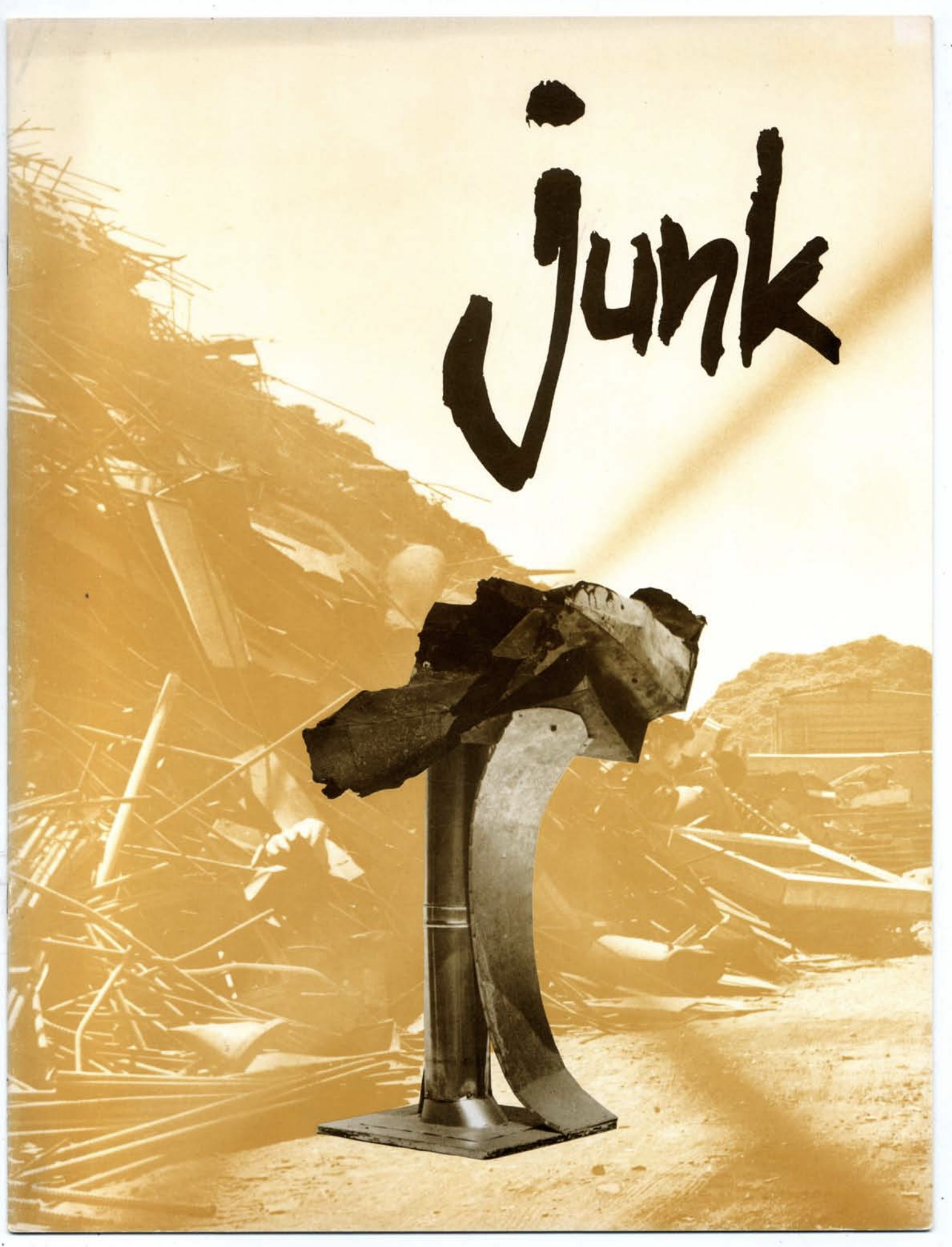
Cover of Junk Art: 66 Signs of Neon, the 1966 catalog documenting the exhibition.
Junk Art, 66 Signs of Neon
Published on the occasion of the 66 Signs of Neon exhibition, the 1966 catalog documents the project with photographs of the assemblages, artist credits, and Noah Purifoy’s account of the project and its ideas about art, communication, and community. Photography is by Harry Drinkwater, with layout and design by Al Khanasa and graphics by Debby Brewer.
Excerpt: The Art of Communication as a Creative Act
66 Signs of Neon exists on several levels as an art exhibition dominated by assemblages of artifacts of the Watts riots (August 1965); as a one-to-one format of communication between individuals who otherwise would not or could not communicate; as an evolving system of philosophy. It began as an expression of the necessity for art education, affirming the importance of this avenue of self-expression to individuals in the community of Watts. Noah Purifoy and Judson Powell began with six assemblages created from the lead drippings of melted neon signs, artifacts of the riots. As their work continued they recruited six other professionals skilled in the plastic and graphic arts. In concert, the group set out to create 66 separate works of art for the festival, in the incredibly brief period of 30 days. They labored literally night and day, groping through “the glittering, twisted, grotesquely formed materials, each interpreting in his own way the August happening”.
The assemblage of junk illustrated for the artists the imposition of order on disorder, the creation of beauty from ugliness. Its analog was the essence of communication…The reason for being in our universe is to establish communication with others, one to one. And communication is not possible without the establishment of equality, one to one.

Noah Purifoy at the 66 Signs of Neon exhibition. Photo: Harry Drinkwater.

Judson Powell with Barrel and Plow, co-created with Noah Purifoy.

Spoons by Max Neufeldt.
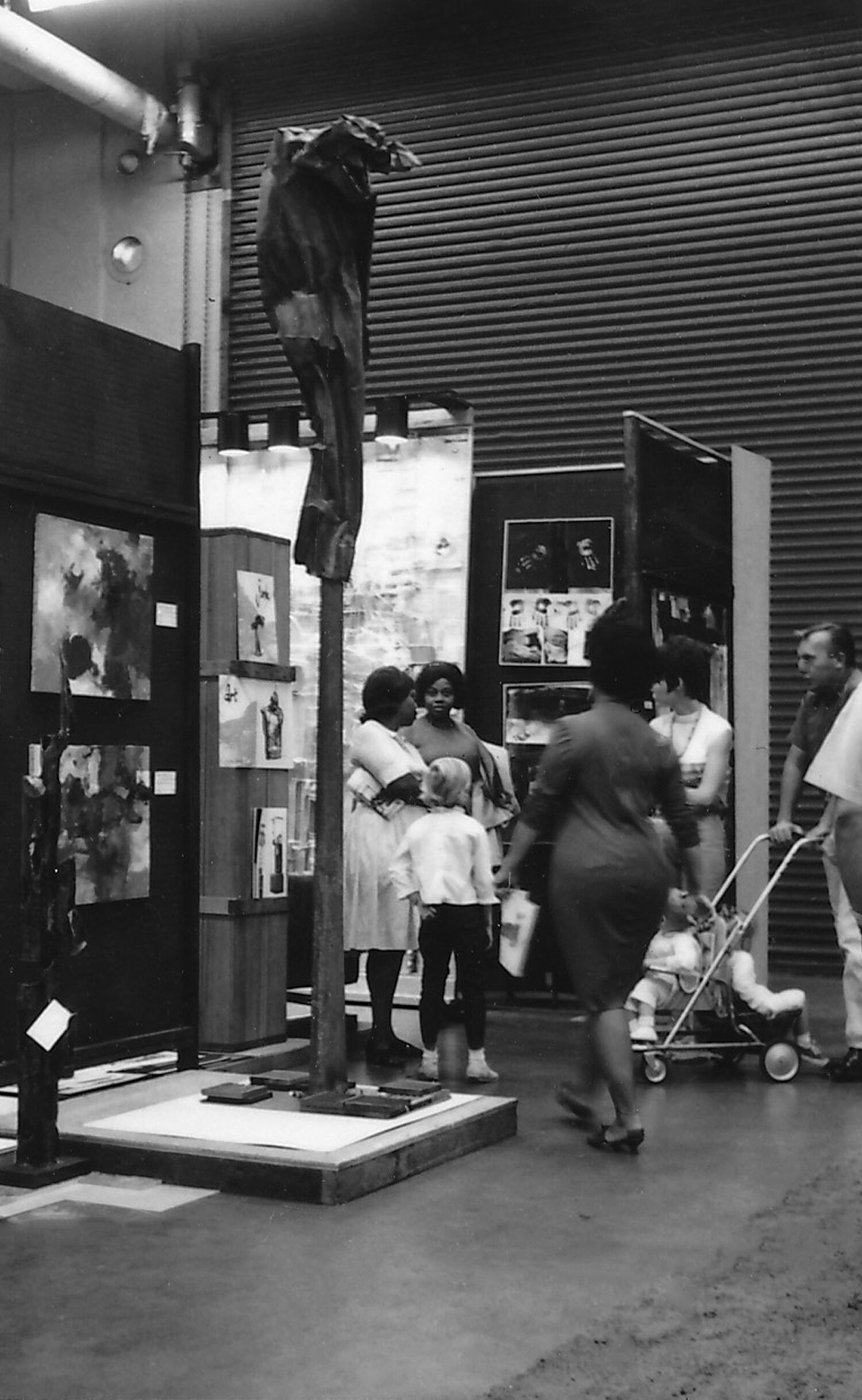
Installation view featuring Phoenix by Judson Powell in the foreground.


Materials gathered for the creation of 66 Signs of Neon.
Installation view featuring Sudden Encounter by Noah Purifoy in the foreground.

Installation view featuring Ode to the Feminine Gender, center, and Sir Watts, left, by Noah Purifoy.

Noah Purifoy with Untitled, 1966.

Installation view featuring Breath of Fresh Air by Noah Purifoy, second from left.

Max Untitled by Max Neufeldt.